Custom Twitch Emotes: 7 Brutal Reasons Yours Are Destroying Channel Growth
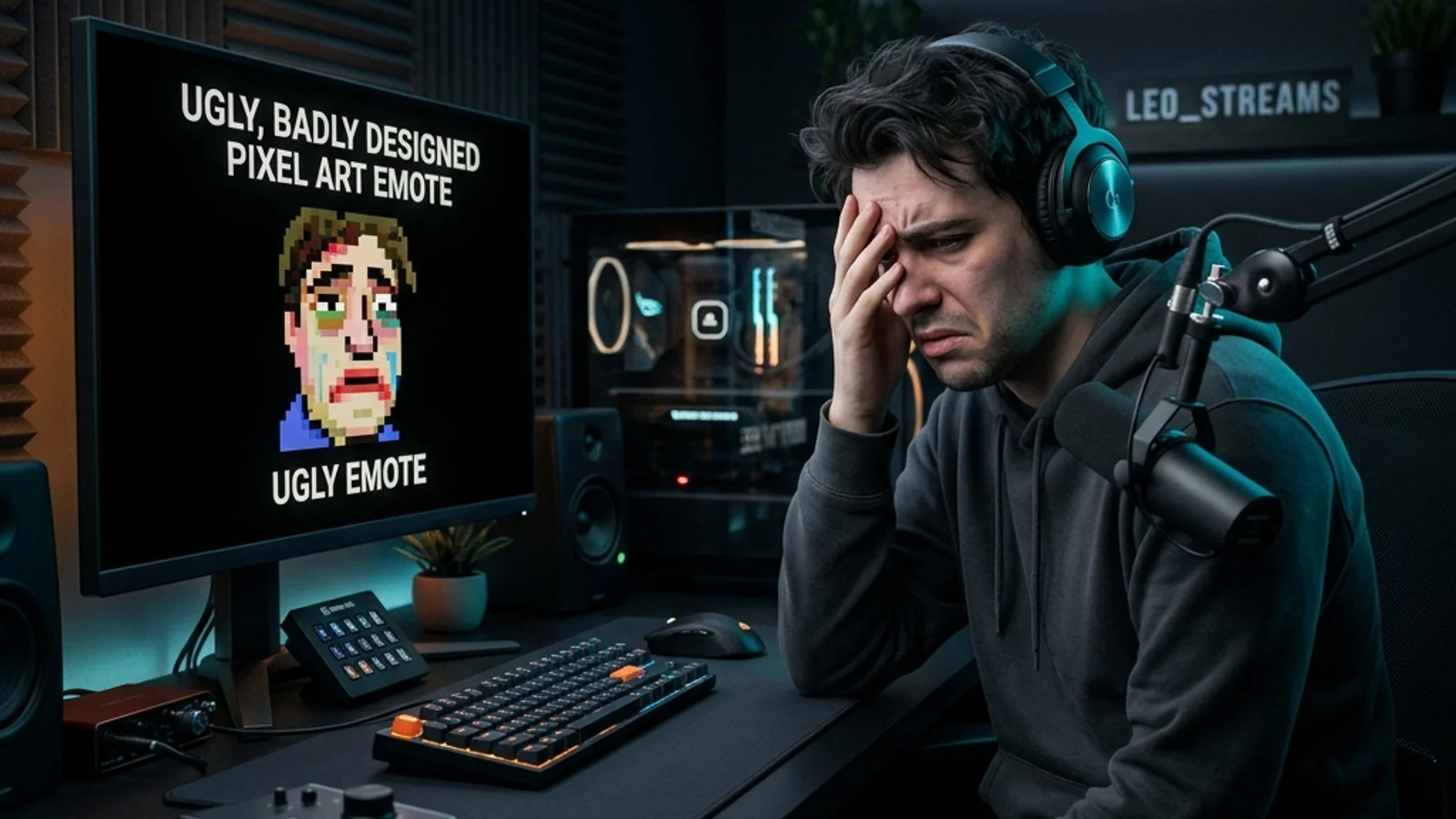
Let us be entirely honest: you probably think your custom Twitch emotes are great. You paid an artist good money, you love the design, and your closest friends in chat use them. But the brutal reality? Most custom Twitch emotes are actively sabotaging channel growth, turning away potential subscribers, and failing at the exact psychological mechanisms they were designed to exploit.
As experts who have analyzed thousands of stream communities, we have identified a catastrophic trend. Streamers are pouring hundreds of dollars into custom Twitch emotes that look incredible on a 4K monitor but fail fundamentally at their core purpose: driving retention, communicating emotion, and acting as community marketing tools. If your channel growth has stagnated, your custom Twitch emotes might be the silent killers.
In this comprehensive, 2200+ word deep dive, we are going to dissect the seven brutal truths about why your custom Twitch emotes are destroying your channel. We will strip away the subjective "art" side and look at the brutal, objective science of visual communication, user experience, and subscriber economics.
1. The Legibility Crisis: Your Custom Twitch Emotes Are Unreadable
The first and most fatal mistake streamers make with custom Twitch emotes is failing to understand the medium. A Twitch emote is not a canvas painting; it is an icon. When you request highly detailed, intricate custom Twitch emotes, you are fundamentally misunderstanding how human eyes process small images in high-velocity environments.
Most viewers watch Twitch on a mobile device or a standard monitor where chat scrolls rapidly. In these environments, your custom Twitch emotes are rendered at a microscopic 28x28 pixels. If your emote relies on fine details—like specific text, complex background patterns, or subtle facial expressions—it will render as an unrecognizable, blurry blob. This lack of legibility completely neutralizes the emote's value.
Consider the psychology of chat interaction. A viewer has approximately 0.5 seconds to register an emote as it scrolls past. If they cannot instantly decode the emotion or meaning of your custom Twitch emotes, they will not adopt them into their own communication vocabulary. You are essentially asking your audience to learn a broken language.
We see this constantly with highly ambitious pixel art. Streamers commission 112x112 pixel art custom Twitch emotes, which look stunning in a portfolio. But downscaled to 28x28, the anti-aliasing algorithm crushes the pixel grid, turning a sharp design into a muddy mess. The brutal truth is that minimalist, high-contrast, vector-style custom Twitch emotes outperform detailed pixel art by a factor of ten when it comes to actual chat usage.
To fix this, you must ruthlessly simplify. Your custom Twitch emotes should consist of a maximum of three primary colors and one bold, undeniable shape. Remove the neck, remove the shoulders, remove the background. If you cannot understand the emote by squinting at it from five feet away, it is a failed design.
2. Inside Jokes: The Ultimate Subscriber Repellent
Every streamer loves an inside joke. It feels great to have a shared language with your core community. However, dedicating your valuable, limited custom Twitch emotes slots to obscure inside jokes is one of the fastest ways to alienate new viewers and stifle channel growth.
Imagine a new viewer drops into your stream. They are enjoying the content and considering hitting that subscribe button. They look at your custom Twitch emotes to see what they will get for their five dollars. Instead of universally applicable reactions (Hype, Sad, Laughing, Rage), they see a picture of a random shoe, a distorted picture of your dog, and a highly specific text emote that only makes sense if you were watching a specific stream three years ago.
Why would they subscribe? You have provided them with zero utility. Custom Twitch emotes are tools for viewers to express themselves. When you limit those tools to highly niche, context-dependent inside jokes, you drastically reduce the perceived value of your subscription tier.
The most successful custom Twitch emotes are universally applicable but specifically branded. Think of the legendary "LUL" or "Kappa" emotes. They convey a universal emotion, but they are tied to a specific face. Your custom Twitch emotes must strike this balance. You can have one or two inside-joke emotes, but the vast majority of your custom Twitch emotes must serve a clear, universal conversational purpose.
If you want to read more about building a universally appealing brand, check out our Complete Streamer Branding Guide. Furthermore, you can review Twitch's official subscriber emote guidelines to understand baseline requirements.
3. Ignoring Psychological Color Theory in Custom Twitch Emotes
Color is not just an aesthetic choice; it is a psychological trigger. Yet, a staggering number of streamers commission custom Twitch emotes without a basic understanding of color theory, resulting in emotes that subconsciously repel viewers or blend completely into the chat background.
Twitch chat operates in two primary modes: Light Mode (white background) and Dark Mode (dark gray/black background). If your custom Twitch emotes rely heavily on dark outlines with dark fill colors, they will completely vanish for the 80% of viewers using Dark Mode. Conversely, overly bright pastel custom Twitch emotes will wash out in Light Mode.
But the problem goes deeper than just contrast. Colors evoke specific emotional responses. Red triggers urgency, hype, and anger. Blue conveys sadness, calmness, or coldness. Yellow grabs attention and signals joy or warning. When you design custom Twitch emotes, the color palette must align with the intended emotion of the emote.
If your "Hype" emote uses cool, muted blues and greens, it creates cognitive dissonance. The visual language contradicts the intended emotional message. Viewers will instinctively avoid using it because it "feels wrong," even if they cannot articulate why. The best custom Twitch emotes utilize vibrant, highly saturated colors that pop off both dark and light backgrounds, driving immediate emotional recognition.
Furthermore, your custom Twitch emotes must utilize strong, contrasting borders. A white or brightly colored 1-2 pixel stroke around the edge of your custom Twitch emotes guarantees visibility regardless of the user's interface settings. This is not optional; it is a fundamental requirement of professional emote design.
4. The Negative ROI of Text-Heavy Custom Twitch Emotes
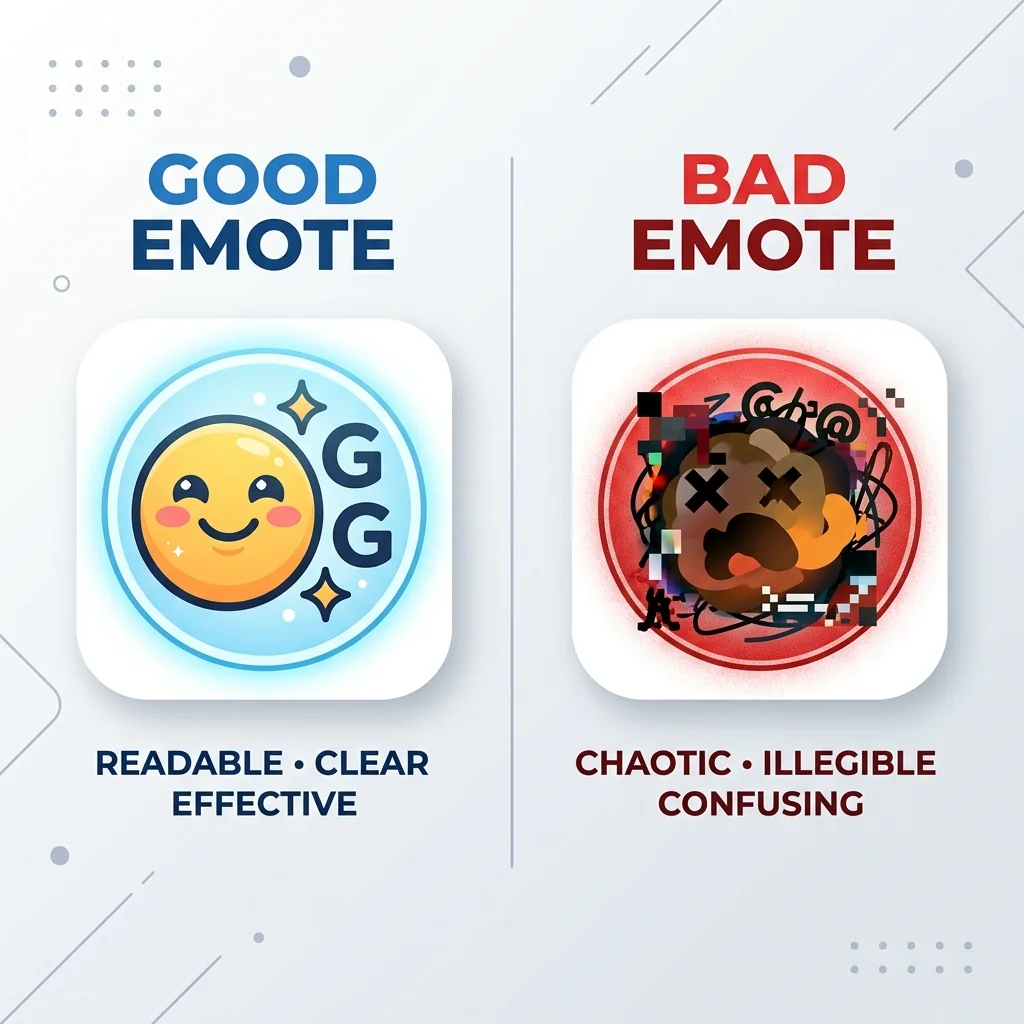
This is perhaps the most painful truth to accept: text-heavy custom Twitch emotes are almost always a massive waste of a subscriber slot. Unless the text is no more than three or four letters (like "GG", "RIP", or "W"), it will be entirely unreadable in the chat box.
Streamers frequently commission custom Twitch emotes containing full phrases or long words. At 112x112 pixels, it looks like a fun, stylized badge. At 28x28 pixels, it looks like a barcode that has been run over by a truck. When a viewer uses a text emote, and the rest of the chat cannot read it, the viewer feels foolish and will never use that emote again.
This creates a negative return on investment (ROI). You paid an artist to create the emote, but because it fails the legibility test, it generates zero engagement and zero subscription drive. Custom Twitch emotes must rely on visual symbolism, not written words, to convey complex ideas.
If you absolutely must use text in your custom Twitch emotes, the typography must be massive, bold, and highly contrasting against its background. The letters should take up at least 70% of the total canvas space. Never use thin, cursive, or highly stylized fonts. The goal is brutal efficiency in communication, not elegant calligraphy.
5. Failing the "Cross-Platform" Viability Test
In 2026, streamers are no longer confined to a single platform. You are likely managing a Discord server, posting on YouTube, and perhaps multi-streaming. Your custom Twitch emotes are the visual connective tissue that binds these disparate platforms together into a single, cohesive brand identity.
The brutal truth is that if your custom Twitch emotes only work in the specific context of a Twitch chat room, you are severely limiting their value. Your custom Twitch emotes should be versatile enough to function as reaction images on Twitter, stickers in Discord, and thumbnail elements on YouTube.
When you design custom Twitch emotes with this cross-platform viability in mind, you stop thinking of them as just "chat icons" and start treating them as vital marketing assets. A highly expressive, recognizable custom Twitch emote can become a meme within your niche, spreading far beyond your immediate viewership and drawing new eyes to your content.
However, if your custom Twitch emotes are overly complex, rely on Twitch-specific meta-humor, or suffer from poor transparency rendering outside of the Twitch ecosystem, they will fail to bridge the gap. You must ensure your custom Twitch emotes are exported properly with clean alpha channels, free from the dreaded "white fringing" that occurs when an image is improperly masked from its background.
For more details on navigating cross-platform constraints, review our guide on Kick vs Twitch Emotes.
6. The Sub-Tier Incentive Failure
Twitch provides different emote slots for Tier 1, Tier 2, and Tier 3 subscribers. This is not an accident; it is a highly tuned psychological monetization structure. The brutal truth is that most streamers completely fail to utilize their custom Twitch emotes to drive higher-tier subscriptions.
Often, a streamer will place their best, most versatile custom Twitch emotes in the Tier 1 slots, and leave the Tier 2 and Tier 3 slots for leftover, mediocre ideas. This completely destroys the incentive for a viewer to upgrade their subscription. Why would someone pay $9.99 or $24.99 a month if the custom Twitch emotes they receive are inferior to the $4.99 tier?
To maximize revenue, you must employ a strategic hierarchy for your custom Twitch emotes. The Tier 1 custom Twitch emotes should be the bread-and-butter reactions—the "Hype," the "LUL," the "Cry." These ensure high volume usage. The Tier 2 and Tier 3 custom Twitch emotes must be premium status symbols. They should be visually distinct, highly animated (if possible), or feature highly requested variations of the most popular Tier 1 emotes.
When a viewer uses a Tier 3 custom Twitch emote, it should immediately signal to the rest of the chat that they are a high-level supporter. It is a digital Rolex. If your high-tier custom Twitch emotes do not carry this prestige, you are leaving massive amounts of revenue on the table. You are treating custom Twitch emotes as an afterthought, rather than the core economic driver of your channel.
7. The Inconsistency of "Frankenstein" Emote Boards
Over time, as a channel grows, a streamer will accumulate custom Twitch emotes from different artists, different eras of their stream, and in vastly different art styles. The result is a "Frankenstein" emote board—a chaotic, disorganized mess of conflicting aesthetics.
This inconsistency is incredibly damaging to your brand authority. When a potential subscriber looks at a cohesive, beautifully unified set of custom Twitch emotes, it signals professionalism, dedication, and quality. When they look at a mismatched jumble of custom Twitch emotes, it signals amateurism and a lack of clear vision.
You must have the courage to audit and retire old custom Twitch emotes. Just because an emote was popular three years ago does not mean it still serves your channel today. If a custom Twitch emote does not fit your current branding, or if its usage metrics have fallen off a cliff, remove it. Replace it with a new, high-quality design that matches your current aesthetic.
Your emote board is a curated gallery, not a hoarding space. Every single one of your custom Twitch emotes must justify its existence. They must all look like they belong to the same visual family, utilizing consistent line weights, shading techniques, and character proportions.
The Science of Emote Analytics
To truly fix your custom Twitch emotes, you must stop relying on gut feeling and start relying on data. Twitch provides emote analytics. Use them. If one of your custom Twitch emotes is consistently in the bottom 10% of usage, it is a failed asset.
Do not be precious about your custom Twitch emotes. If a design is not performing, cut it. Experiment with different colors, different expressions, and different levels of simplicity. Treat your custom Twitch emotes like A/B testing in marketing. The market (your chat) will tell you exactly what they want through their usage patterns.
This ruthless, data-driven approach separates the hobbyists from the professionals. The streamers who experience massive, sustained growth understand that custom Twitch emotes are not just fun little pictures; they are highly optimized tools for engagement and monetization.
Conclusion: Reclaiming Your Channel Growth
The truth about custom Twitch emotes is harsh, but necessary. For too long, the streaming community has prioritized subjective artistic preference over objective communicative function. Your custom Twitch emotes are the voice you give to your audience. If that voice is muffled, confusing, or unappealing, your audience will simply stop speaking.
By simplifying your designs for the 28x28 reality, mastering color theory, eliminating inside jokes, and treating your higher tiers as premium status symbols, you can transform your custom Twitch emotes from a channel-killing liability into your most powerful engine for growth.
Audit your emote board today. Look at every single icon and ask yourself: is this custom Twitch emote driving my channel forward, or is it holding me back? The answer might be brutal, but it is the first step toward building the highly engaged, rapidly growing community you deserve.

Levi
Chief Editor & Hardware Analyst
A veteran PC builder and open-world enthusiast, Levi specializes in hardware benchmarking and engine analysis. He also contributes to Specvi.com and LeonidaInsider.com.
Ready to Resize Your Emotes?
Use our free tool to create perfectly sized emotes for Twitch, Kick, and Discord. No watermarks, no uploads—your images never leave your device.
Try the Emote Resizer →Related Articles
Complete Twitch Emote Size Guide for 2026: Everything Streamers Need to Know
Master Twitch emote requirements with our comprehensive 2026 guide. Learn exact pixel dimensions (28x28, 56x56, 112x112), file formats, optimization tips, and common mistakes to avoid.
How to Create Animated Twitch Emotes: The Complete 2026 Guide
Learn to create smooth, engaging animated Twitch emotes that meet all requirements. Covers GIF optimization, frame rates, file size tricks, and recommended software.