The New Paradigm of Streaming in 2026: AI Curation, Platform Wars, and the Take It Down Act
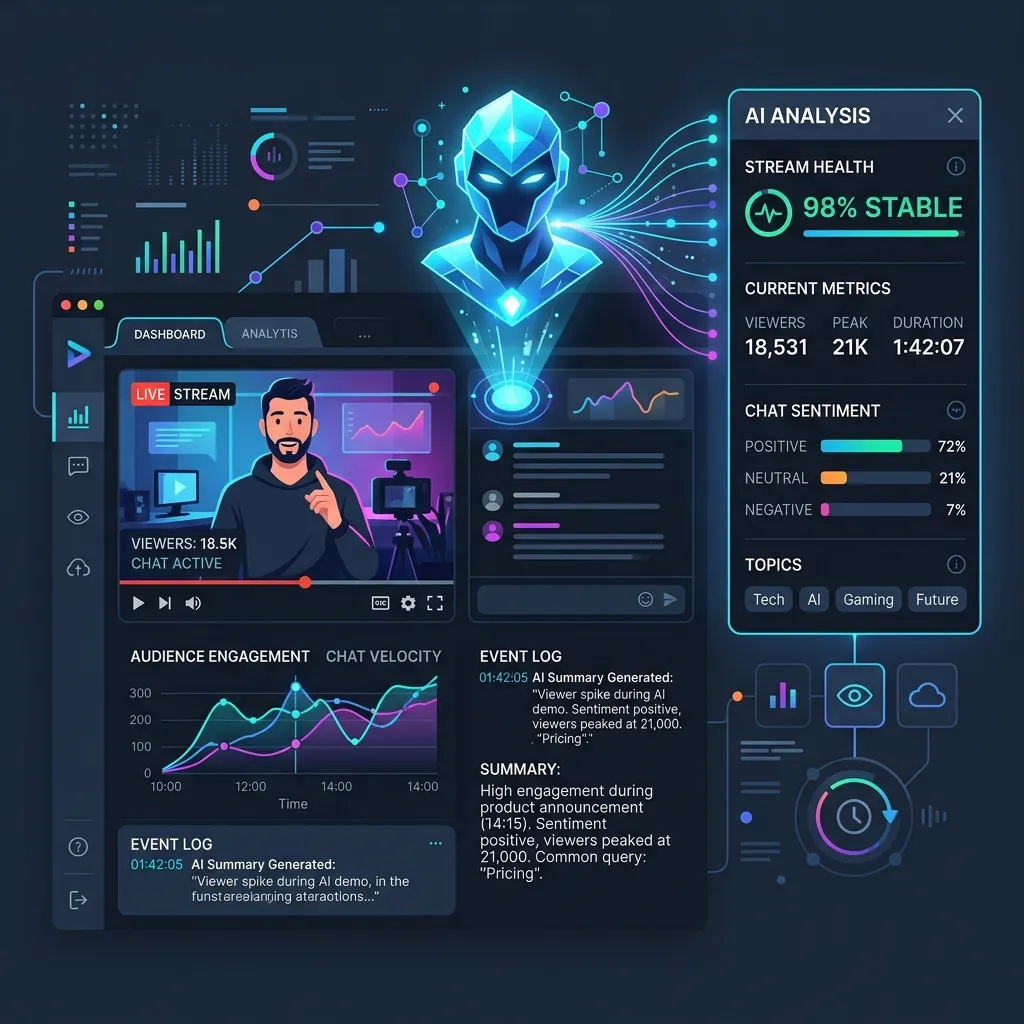
As we close out May 2026, the live streaming ecosystem has officially entered a new technological epoch. Over the past 30 days, we have witnessed a convergence of generative AI deployment, aggressive platform maneuvering, and sweeping federal legislation that fundamentally alters the operational reality for creators. This exhaustive report analyzes the technological, economic, and legal frameworks that define the current state of streaming, offering an authoritative perspective on what these shifts mean for streamers, viewers, and the infrastructure that connects them.
The streaming industry has never been static, but the sheer velocity of change in the second quarter of 2026 is unprecedented. We are no longer discussing theoretical applications of Large Language Models (LLMs) or speculative legal frameworks; we are analyzing live, deployed systems that process exabytes of data in real-time, backed by strict legislative mandates. From the halls of TwitchCon Europe in Rotterdam to the rapid infrastructure scaling at Kick, the battleground has shifted from mere talent acquisition to deep, algorithmic curation and legal resilience.
Part I: The Twitch AI Summarization Engine and the End of "Fear of Missing Out" (FOMO)
Perhaps the most significant technological announcement of the year occurred at TwitchCon Europe on May 30, 2026. Twitch officially began the global rollout of its "AI Stream Summaries" feature, a system designed to solve one of the oldest retention problems in live broadcasting: the mid-stream viewer drop-off. For years, the streaming meta relied on FOMO—if you weren't there when the broadcast started, you missed the context, leading many potential viewers to simply close the tab rather than attempt to decipher an ongoing narrative.
The Architecture of Real-Time Semantic Curation
To understand the magnitude of this update, we must look under the hood of Twitch's new ingestion pipeline. The platform is not merely transcribing audio; it is performing multi-modal semantic analysis at scale. When a viewer joins a stream two hours into a broadcast, the system doesn't just hand them a transcript. Instead, it leverages a specialized, fine-tuned Small Language Model (SLM)—reportedly operating in the 8-to-13 billion parameter range—to analyze a combination of the streamer's vocal cadence, the on-screen optical character recognition (OCR) data, and the semantic velocity of the chat.
The system works by establishing "contextual checkpoints." Every five minutes, the SLM digests the preceding window and generates a compressed semantic vector. When a late-arriving viewer clicks "Catch Me Up," the edge node dynamically compiles these vectors into a cohesive, human-readable three-sentence summary, personalized to the viewer's language preferences. This is an incredible feat of distributed engineering, requiring sub-200 millisecond latency while maintaining cost efficiency across millions of concurrent streams.
The Impact on Creator Workflows and Emote Utility
For creators, this fundamentally changes how streams are structured. The traditional advice was to verbally recap the stream's progress every 30 minutes. That is now obsolete. Streamers are now being advised to actively "seed" the AI by using specific, high-density keywords during critical moments to ensure the AI summary accurately reflects the core narrative. Furthermore, our analysis at StreamEmote shows that the SLM heavily weighs custom emotes in its sentiment analysis. A sudden influx of your channel's specific "hype" or "fail" emotes acts as a high-confidence signal to the summarization engine, effectively allowing the community to democratically curate the AI's understanding of the event.
Furthermore, Twitch announced the rollout of 2K streaming capabilities for Partners and Affiliates, alongside dual-format vertical video for mobile users. The vertical video integration is explicitly tied to auto-generated clip highlights, which also utilize the new AI engine to detect vocal inflection spikes and chat activity bursts. This creates an autonomous, closed-loop marketing engine: the creator streams, the AI clips the highest-engagement moments based on emote velocity and audio peaks, and automatically pushes them to the new vertical discovery feed.
Part II: Kick's Ascendancy and the 100 Million User Milestone
While Twitch focuses on algorithmic curation, the platform wars continue to escalate. In April 2026, Kick crossed a historic milestone: 100 million registered users. While Twitch maintains a formidable lead with approximately 140 million Monthly Active Users (MAUs) and significantly higher total hours watched, Kick is no longer a peripheral alternative; it is a central pillar of the modern streaming ecosystem.
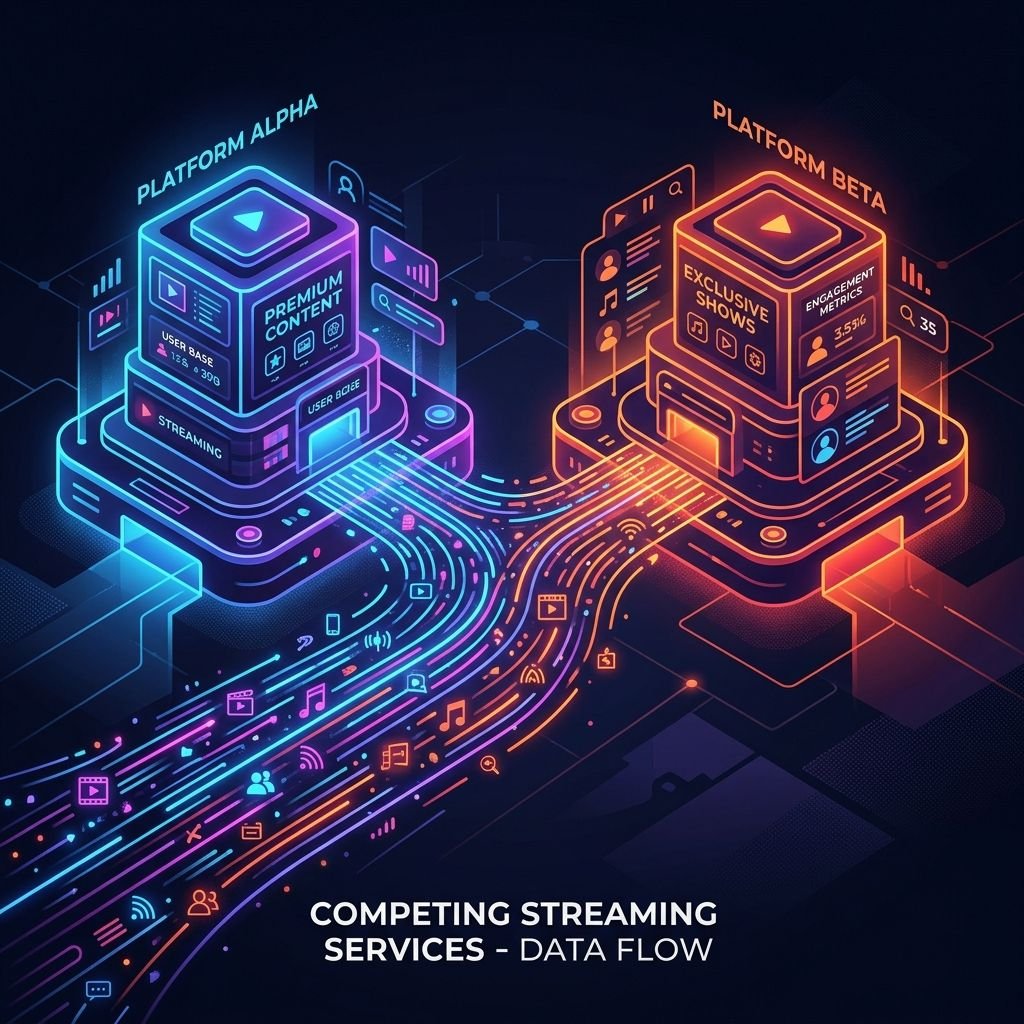
Fig 2: The bifurcation of the streaming audience and the rise of multi-platform broadcasting architectures.
The Economics of the 95/5 Split in 2026
The industry spent years debating the sustainability of Kick's aggressive 95/5 subscription revenue split in favor of the creator. By 2026, the strategy has crystallized. Kick is operating on a fundamentally different economic model than traditional tech platforms. While server costs, bandwidth (especially video egress), and edge-caching infrastructure remain astronomically expensive, Kick's integration with broader gaming and lifestyle verticals has provided the necessary capital runway to sustain this loss-leader approach to talent acquisition.
This economic pressure has forced the entire industry to adapt. We are seeing an unprecedented era of "Creator Leverage." The simulcasting meta, once a niche practice, is now standard operating procedure. Creators are utilizing sophisticated, low-latency rebroadcasting hubs to push their signal to Twitch, Kick, YouTube, and TikTok simultaneously. This multi-homing strategy mitigates platform risk and maximizes total reach, but it introduces massive complexities in community management.
Managing the Fragmented Chat Interface
When an audience is split across three platforms, the concept of a "unified community" begins to fracture. How do you maintain inside jokes, emote cultures, and shared experiences when viewer A is on Kick and viewer B is on Twitch? The technological response in 2026 has been the rapid development of unified chat aggregators powered by semantic sorting.
These advanced tools don't just display three chat columns; they utilize the same SLM technology discussed earlier to merge the chats conceptually. If the Twitch chat spams :TwitchHype: and the Kick chat spams :KickHype:, the aggregator translates the underlying emotional intent and presents the streamer with a unified "Hype Metric." For emote designers, this means creating platform-agnostic visual language is more important than ever. The actual pixel dimensions may vary slightly (28x28 for Twitch, 32x32 for Kick), but the core silhouette and emotional readability must remain perfectly consistent to bridge the cross-platform divide.
Part III: The "Take It Down Act" and the New Era of Compliance
While technological innovation and platform economics dominate the headlines, the most consequential shift of May 2026 occurred in the legal realm. On May 19, 2026, the federal compliance deadline for the "Take It Down Act" officially passed. This legislation represents a seismic shift in how platforms must handle user-generated content, specifically targeting the malicious use of generative AI.

Fig 3: The implementation of mandatory 48-hour compliance pipelines and real-time deepfake detection protocols.
The Engineering Challenge of the 48-Hour Mandate
The "Take It Down Act" mandates that platforms must have efficient, highly responsive pipelines to remove non-consensual intimate imagery (NCII), which the law explicitly defines to include AI-generated deepfakes. Platforms are now legally obligated to act on verified removal requests within a strict 48-hour window. Failure to comply strips the platform of crucial safe harbor protections, exposing them to catastrophic liability.
For platforms like Twitch and Kick, the engineering challenge is staggering. Live streaming is ephemeral by nature, but VODs (Video on Demand) and Clips persist. If a malicious user utilizes an AI-driven text-to-speech engine to deepfake a creator's voice, or uses a virtual camera to project an AI-generated visage of a real person into a stream, the platform must be able to detect, quarantine, and remove that content across millions of terabytes of stored media within two days of a verified report.
The Death of Anonymity in Viewbotting Networks
This legislation intersects directly with another major initiative announced by Twitch CEO Dan Clancy in early May: the aggressive, algorithmic war on sophisticated viewbotting networks. For years, viewbots were simple scripts. In 2026, "viewbotting" often involves complex, AI-driven behavioral models where bots possess unique IP addresses, realistically interact with chat, and utilize emotes in contextually appropriate ways to evade detection.
Twitch's new real-time detection algorithms are fundamentally linked to their new compliance infrastructure. By deploying advanced behavioral heuristics, they are identifying the subtle, non-human interaction patterns of these AI botnets. However, the platform has stated they will not publicly disclose the specific enforcement metrics or the technical details of their detection algorithms. This "security through obscurity" approach is designed to prevent botting services from rapidly iterating and adapting to the new countermeasures.
The combination of the Take It Down Act and aggressive bot mitigation means that the era of the "Wild West" internet is rapidly closing. Platforms are being forced, under threat of legal and financial ruin, to assert absolute control over their ingest pipelines. Every frame of video, every line of text in chat, and every custom emote uploaded is now subject to unprecedented levels of automated scrutiny.
Part IV: The Intersection of Emotes and Deepfake Heuristics
You might wonder how custom emotes factor into federal legislation regarding AI deepfakes. The connection lies in the training data and the heuristics used by detection algorithms. As we discussed in our previous research reports, emotes are highly dense semantic tokens. They are the purest expression of a channel's unique culture.
When security algorithms scan a VOD to determine if the broadcast was hijacked by an AI deepfake, they look for anomalies. If the visual characteristics of the streamer change, the algorithm checks the chat's reaction. A human audience will immediately recognize an uncanny valley effect or a deepfake artifact, and their emote usage will instantly reflect confusion, fear, or trolling. The semantic spike of specific "WutFace" style emotes acts as a secondary verification layer for the automated systems. The audience, through their emote usage, effectively acts as a distributed, crowdsourced anomaly detection network.
Conversely, malicious actors deploying advanced botnets will attempt to simulate normal chat behavior to mask their activities. This creates a high-stakes algorithmic arms race. Emote designers are inadvertently creating the very tokens that these neural networks use to determine authenticity. A highly unique, culturally specific emote library makes a channel much harder to successfully bot or deepfake, because the nuances of how and when those specific emotes are used are incredibly difficult for a generalized AI to convincingly replicate.
Part V: The Strategic Imperative for Creators in Late 2026
As we synthesize these developments, the strategic imperative for creators becomes clear. Success in the latter half of 2026 requires an understanding that you are operating within a highly optimized, heavily monitored, and ruthlessly algorithmic environment. The days of simply turning on a camera and playing a game are long gone.
1. Designing for the Algorithm, Not Just the Audience
Your audio mix, your choice of on-screen text, and the visual clarity of your stream directly dictate how the AI Summarization Engine interprets your content. Clear articulation and specific keyword usage during critical moments are now fundamental broadcasting skills. You must "direct" the AI just as much as you entertain the human viewer.
2. Emote Ecosystems as Intellectual Property
Your custom emotes are no longer just subscriber perks; they are the semantic vocabulary that the platform uses to categorize, summarize, and promote your stream. Investing in high-quality, emotionally distinct emotes is a direct investment in your algorithmic discoverability. A generic emote library leads to generic semantic tagging, which leads to lower prioritization in the discovery feed.
3. Embracing the Multi-Platform Reality
With Kick proving its staying power and the technology for simulcasting becoming frictionless, creators must decouple their brand from any single platform. You are a sovereign entity broadcasting to multiple distribution networks. Your branding, your alerts, and most importantly, your emotes, must be unified and platform-agnostic.
4. Proactive Compliance and Brand Safety
In the wake of the Take It Down Act, the legal landscape is unforgiving. Creators must be aggressively proactive in moderating their spaces. Utilizing advanced automod tools that understand the nuanced intent of chat messages—not just keyword matching—is mandatory. A failure to quickly address malicious AI-generated content in your community spaces could result in catastrophic platform bans as networks over-correct to ensure federal compliance.
Conclusion: The Architecture of Synchronicity
The developments of May 2026 highlight a profound paradox in modern streaming. As the technology becomes increasingly automated, heavily regulated, and driven by complex artificial intelligence, the core product remains fundamentally human: the synchronous, shared emotional experience.
Twitch's AI summaries, Kick's infrastructure scaling, and the implementation of federal deepfake legislation are all massive technological undertakings designed to do one thing: protect and facilitate that human connection. The AI is not replacing the streamer; it is indexing the emotion the streamer generates. The edge networks are not replacing the community; they are ensuring the community can react with sub-millisecond latency. And the legislation is not designed to stifle creativity; it is designed to protect the authenticity of the human identity in an increasingly synthetic world.
As we move forward, the most successful creators and platforms will be those who master this synthesis—who understand how to leverage the immense power of the machine to amplify, rather than obscure, the profoundly human act of live broadcasting. The paradigm has shifted, the rules have been rewritten, and the next era of live streaming has officially begun.

Levi
Chief Editor & Hardware Analyst
A veteran PC builder and open-world enthusiast, Levi specializes in hardware benchmarking and engine analysis. He also contributes to Specvi.com and LeonidaInsider.com.
Ready to Resize Your Emotes?
Use our free tool to create perfectly sized emotes for Twitch, Kick, and Discord. No watermarks, no uploads—your images never leave your device.
Try the Emote Resizer →Related Articles
Complete Twitch Emote Size Guide for 2026: Everything Streamers Need to Know
Master Twitch emote requirements with our comprehensive 2026 guide. Learn exact pixel dimensions (28x28, 56x56, 112x112), file formats, optimization tips, and common mistakes to avoid.
How to Create Animated Twitch Emotes: The Complete 2026 Guide
Learn to create smooth, engaging animated Twitch emotes that meet all requirements. Covers GIF optimization, frame rates, file size tricks, and recommended software.